BLOG  Anton Gura
A blog that is read, analyzed and thought about
We help children
→ Website creation and SEO promotion
Anton GuraA blog that is read, analyzed and thought about
 comments 0
This interview with Ilon Musk reveals his views on government efficiency, bureaucracy, international politics, and the future of the U.S. economy. Musk shares his ideas on how technology and common sense can change government and improve the lives of ordinary citizens.
→ Impact on human history
→ Efficiency goals
→ Economic implications
→ International Affairs
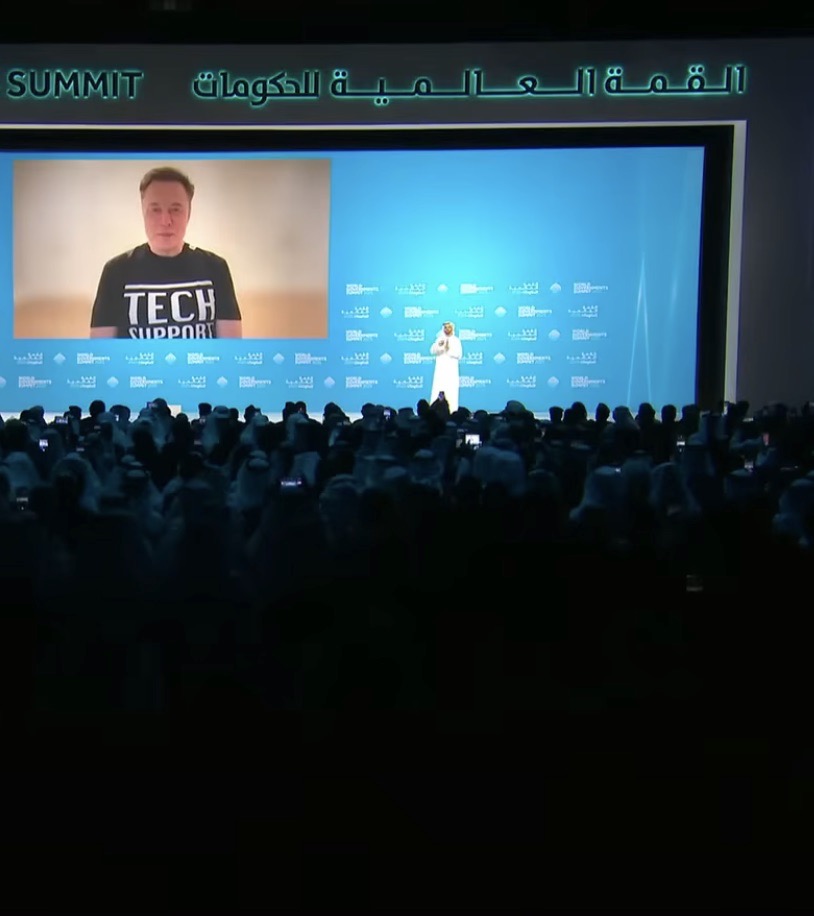
→ Technical Support
→ Automation and cost reduction
→ Education issues and costs
→ Corporate change and artificial intelligence
→ Grog Three and its capabilities
→ OpenAI and its future
→ The Future Without Money
→ Idiocracy and the distribution of intelligence
→ AI education and the search for truth
→ Tunnel safety and efficiency
→ Dubai Loop Project
Hello! I was going to introduce you as a White House technician, but I realize that's not all you do. I am, in my official form, a technical specialist.... You're probably the busiest man on Earth, at least until January 20th. Honestly, I don't even know what to call you right now. But we really appreciate you making time for us.
So, White House technician ... Let's discuss three topics today: first, Dogecoin, then artificial intelligence, and finally, boring cities. Great? I'd like to start with...
I'd like to start by asking you about your impact on the course of history. Frankly, it's hard to think of anyone who has had such a massive impact on several areas at once: space, communications, artificial intelligence, transportation, and the transition to green energy.
You know, it usually follows a familiar pattern: first people deny you, then they're skeptical, and then they become supporters. They often say, "He's just making promises," but at some point they realize that you're really changing the world.
Do you think this attitude could be repeated in the area of government efficiency? Will people quickly realize what you're doing and become supporters too?
- I think yes. We already have quite a bit of support - at least from the American public, and maybe the world. When people are asked what they'd like to change first, the topic of government efficiency consistently comes out on top. It unites voters of many different views.
As far as I know, about 70% of those polled favor making the government more efficient. That's a lot - more than for any other initiative. So I'm sure we have support.
Of course, there are those who are dissatisfied - especially within the bureaucratic system. I mean, we are moving some functions from the public sector to the private sector. But in essence, we are just moving people with low productivity in the public sector to where they can be really effective - in the private sector. As a result, the production of useful goods and services will increase, and with it the standard of living and well-being of ordinary Americans.

You tend to have a clear goal for each project. For example, SpaceX aims to make humanity multi-planetary. And when it comes to government efficiency - do you just want to save money? Or is there something more behind it? What is your main goal?
- There are several ways to phrase it, but the bottom line is the same: we want to reduce the size of government and make it more accountable to the people. I'm confident that this will produce a better outcome for society.
You see, what we have now is essentially a bureaucracy, not the people. This is no longer democracy. We want to give power back to the people. And to do that, we need to really reduce the size of the federal government and reduce the amount of regulation.
A huge amount of regulations and laws have accumulated over time. It's a natural consequence of a long period of stability and prosperity - every year more and more restrictions are added. And you know, in the history of mankind, more often than not, only wars have forced a rethinking of all this. Global conflicts literally forced countries to abandon outdated norms, otherwise they lost.
If such a "shakeup" no, then year after year the bureaucracy grows - and at some point everything becomes so regulated that almost nothing is possible. And now, frankly, we've reached that point. That is why we are aiming for a real reduction.
We want to reduce regulation and government spending - this will give the economy a chance to grow faster. Perhaps the growth rate will reach 4-5% per year, if we talk about the production of real, useful goods and services.
At the same time, government spending can be cut by 3-4% of the size of the entire economy - that's about a trillion dollars or more. As a result, inflation could stabilize and stop rising as early as 2025 to 2026. That would be just fine.
What's more, if the budget deficit shrinks - say, from two trillion to one trillion - then the U.S. government wouldn't have to buy a trillion dollars worth of debt every year. That would lead to lower interest rates.
And that's already good news for everyone: those who pay mortgages, car loans, credit cards, student loans - any debt will become less burdensome. I think it will have a tangible impact on the average American's life.
I hope it will have a positive effect in other countries as well. Because under the new administration, the US will be less eager to meddle in the affairs of other nations.
Honestly, I think we used to get too involved in international issues....

This may be relevant to many viewers, by the way. I think America should stop meddling in the affairs of other countries and let them work out their own issues. We need to focus on ourselves instead of changing regimes around the world.
Yes, we do. And probably other countries think the same way.
- So, instead of waiting for some big war, you started a war yourself - just internally, against the bureaucracy?
-Yes, exactly. Together with President Trump, we started cutting bureaucracy, getting rid of unnecessary regulations. We have so many agencies and regulators now that they are literally stepping on each other's toes.
It's like imagining a soccer game where there are more referees on the field than players. Such a game wouldn't make sense - the players simply wouldn't be able to pass the ball without hitting the referee. And that's roughly the situation we find ourselves in now in the US. We have about 450 different federal agencies! That's almost two new agencies a year since the founding of the country.
Seriously, how many agencies does it take to run a country? We need 99, not 450. That's for sure.
- And how can you guarantee that all your efforts, the savings, the reforms, the improvements for people's lives - won't disappear in four years? After all, the power cycle in the United States is a four-year cycle. What will give you the confidence that progress will continue?
It's a good question. I think we need to not just cut back, but abolish some agencies altogether. Because if you leave even some of them in place, they will come back. It's like a weed: if you don't pull it out, it will grow back. And if you pull it out, it won't. Yes, it's more difficult, but it's more reliable.
This is not to say that the growth of bureaucracy will stop completely under the next administration. But it will come from a much lower base. Which means we're still moving in the right direction.
For me, the most important thing is to lay a solid foundation for future prosperity. For decades, maybe even centuries. Of course, nothing lasts forever. But I believe we can seriously strengthen the foundations of the United States.
- What lessons can other governments learn from this? Your T-shirt says "tech support." Is it just about technology or is it about more than that? How do you increase efficiency?
Well. the percentage of problems we encounter is shocking.
- This may not seem shocking to those in the know. But most of the problems in government operations do stem from outdated technology. For example, the US government still runs on thousands of old computers. They have Braille reading software installed on them, and these systems can't even communicate with each other. So, yes - tech support is vital here. If we want the state apparatus to work more efficiently, we need to update technology.
Recently, you may have heard, President Trump signed an executive order that makes retirement more difficult for some government employees. Ridiculously, the maximum pension in some cases is as little as $10 a month. Why? Because everything is counted by hand. It's paperwork - documents are put into an envelope and dropped down the shaft. Seriously. And one of the reasons people are so slow to retire is... the speed of the elevator in that very shaft in Pennsylvania.
This sounds like a joke, but alas, it's reality. It all has to be digital. We asked, "Why not digital?" We were told that the digital transformation program has been in place since 2014. It's been 11 years.
| Problem | .Cause | Solution |
|---|---|---|
| Older computers in government | Braille software, systems don't communicate | Technology upgrades |
| Pension of $10/month for government employees | Manual calculation, documents in the mine | Digitalization of the process |
| Delayed retirement | Slow elevator in Pennsylvania mine | Ending paper storage |
| 11 years of digital transformation | Still "Level B" | Active technical modernization |
| 1000 people in the mine with documents | Inefficient use of labor | Automization and transfer to useful areas |
| General Approach | Inefficient systems | Innovation + reductions = efficiency |
Then we asked, "And what level are you at?" - "At a B level." - "Are you giving yourself a B grade?" - "No, we're just still at a B level." That's when I said: we definitely need technical support. Because otherwise people literally won't be able to retire. Even if they wanted to.
That's too bad. There are a lot of old software systems that need to be either updated or removed altogether. A lot of things could be automated. For example, there are about a thousand people working in the very mine where the paper records are kept. But frankly, they could be doing something much more useful. For example, producing goods and services that society really needs.
I mean, even if someone grew tomatoes on their own plot of land and sold them at the farmer's market, that would be more useful than carrying envelopes around the mine.
- Absolutely. There doesn't seem to be anything complicated about it, but you're showing how much more can be improved. So you are increasing efficiency not only through layoffs, but primarily through innovation?
- Exactly. We try to do both, but of course we pay a lot of attention to the technical side. Because it is through updating technology that we can make real progress.
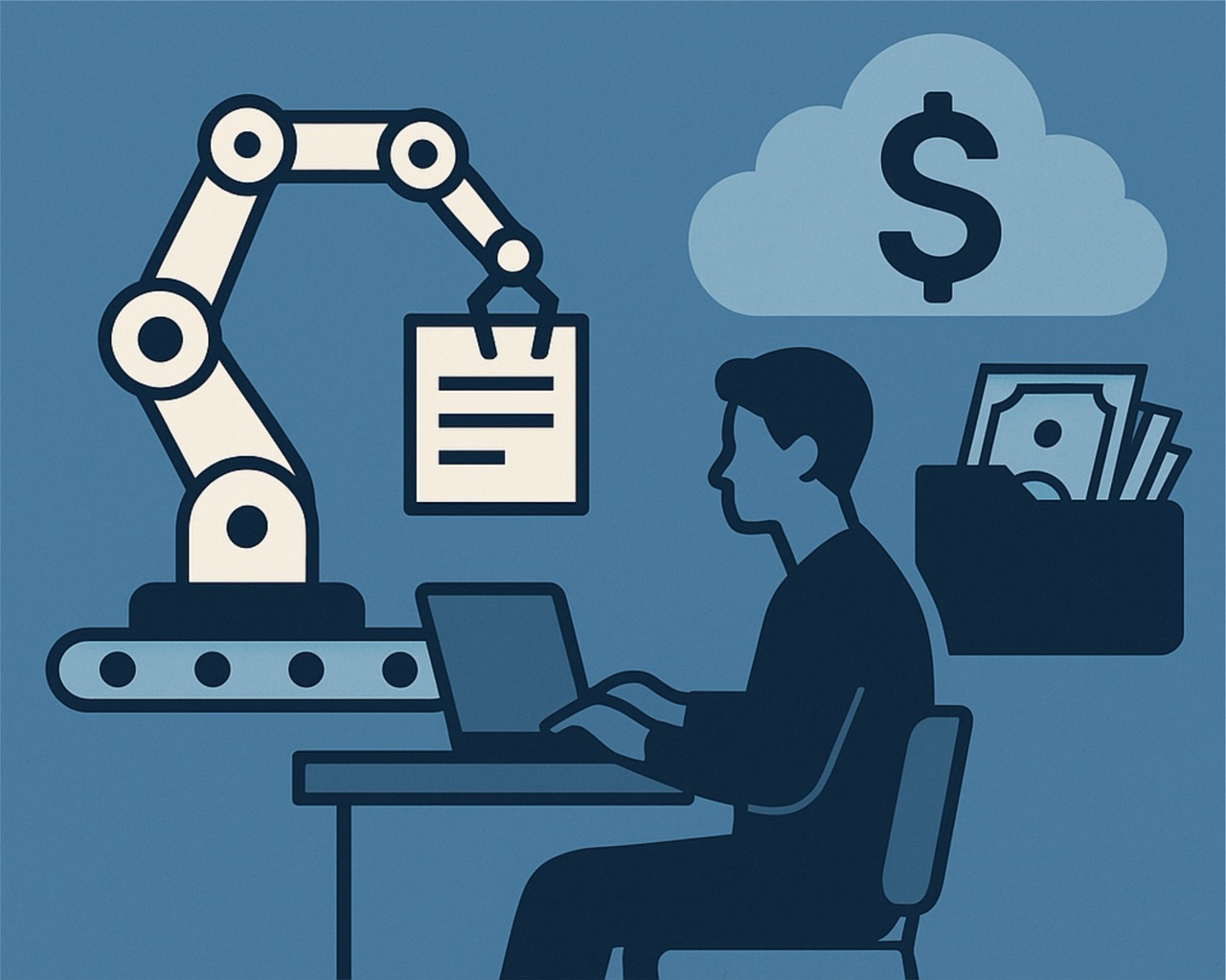
- In fact, costs are actually coming down. For example, it's incredibly expensive to keep a thousand people manually processing paper documents in a mine. And you could digitize all of that and just store it in the cloud. It's inexpensive and technically not difficult at all. Automation in this case is a huge help.
But it's not even just about automation. There are some things that, frankly, shouldn't exist at all. They are useless. Take USAID, for example. We took a close look at many of the programs they run, and at some point we just started asking ourselves: why are they even needed? Are they really necessary?
There is, for example, the National Endowment for Democracy. Sounds noble, but it's worth asking: how much democracy have they actually helped promote lately? I'm honestly not sure how much. There's still a picture of Reagan and Gorbachev hanging on their website - and this is, for the record, the eighties. I mean, you realize how long ago that was.
We're certainly not against democracy. But there are a lot of initiatives and programs that are funded by tax dollars, and we have a legitimate question: why? Why should American taxpayers pay for this?
And you know, the world is increasingly saying that the Trump administration disagrees with that. And it's true - we do want to put an end to this kind of spending.
That's what we're doing now. And, you know, among other things, we need schools to focus more on basic education for children.
As President Trump said - I think it was yesterday or today - the U.S. is now ranked 40th out of 40 in the OECD's education rankings. That is, to put it mildly, very bad.
You know it yourself, of course: despite enormous spending, our results are - to put it mildly - unimpressive. We spend a huge amount of money, and returns almost none.
That's why we need not just to cut costs, but to do it wisely - to spend less and achieve more. This, in principle, applies to many areas.
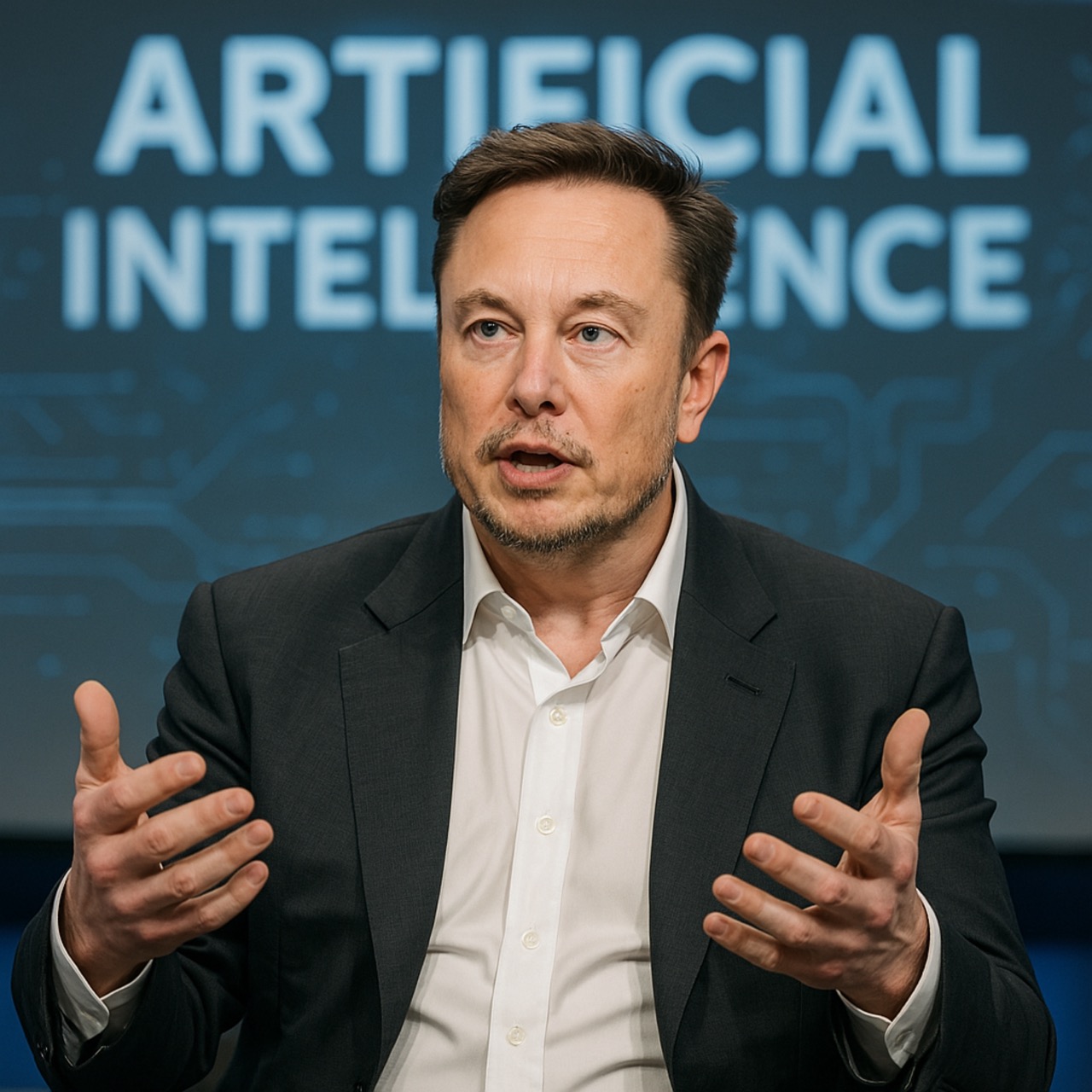
It's like with a big American corporation. Take Twitter, for example. There was a bunch of unnecessary stuff there - and we cut staff by about 80%. But at the same time, the functionality of the site has only grown. We did more in one year than we had done in the previous five.
It's actually like a corporate coup, only on a much bigger scale.
And by the way, we give people pretty generous severance packages. For example, if someone retires, they continue to receive payments until September. During that time, you can take a vacation, find another job, do whatever you want.
It's just that we can't pay longer because the funding authorized by Congress runs out at the end of the fiscal year - which is September. So, yes, there will be changes. But in the end, people will simply move from low-performing government jobs to more productive positions in the private sector.
- As for artificial intelligence... I'm sure you've seen what xAI is doing and the claimed accomplishments. We have been discussing Grok 3 for some time now. Is it going to be a breakthrough in AI?
When will it come out, and what should we expect from it?
- Grok 3 is a really big step forward. It's going to have very powerful capabilities...
- In the tests we ran, the Grok 3 outperformed everything we knew before. That's a really good sign. Sometimes it gives you answers that make you think, "Wow, this is a really smart thing." It's downright frighteningly smart.
It gives out solutions that you didn't even think of. Unexpected, unconventional, yet logical. Grok 3 was trained using enormous computational resources - and I think it was very efficient.
Separately, it trained on a large amount of synthetic data. It then analyzes it on its own, looking for logical inconsistencies. If it finds any, it removes that data. He literally discards anything that doesn't agree with reality. So his basic reasoning is very reliable.
And even without any fine-tuning, Grok 3 already performs better than Grok 2.
We are now in the final stages of preparing for the launch of Grok 3. The release will probably be in a week, two weeks at the most. Very, very soon.
I just don't want to release it in a rush. For the user experience to be really cool, there's still some tweaking that needs to be done. It's like a house, you know, with the last 5% left to paint, finish the trim, put the finishing touches on. It doesn't seem difficult, but it's at these moments that the house starts to look really finished.
So I want to make sure this "last 5%" is done perfectly. It will take a little more time - a week, maybe two. But I think the result will be really impressive.
And maybe it will be the best AI there is today. Or maybe it will be the last time anyone can make an AI better than Grok.
- Looking forward to it. Everyone, without exception.
- Everyone's excited, and while we're on the subject, I want to go back to a topic you brought up recently. You seem to have personally proposed a $97 billion deal to buy OpenAI. We've discussed that a little bit. I was at the very meeting, by the way, where you and Sam talked - that was in 2017 in Los Angeles, if you remember. You were the largest shareholder then, as far as I know, invested about 50 million dollars.
It must be a bit frustrating... Paying 50 million and then - years later - discussing a 97 billion dollar deal.
- Well, I don't actually have any stock in OpenAI. None at all. It was a non-profit organization at the time. Yes, it sounds ironic to invest $50 million and get nothing in return. But fate loves a twist like that.
- Then let me ask you directly: is it possible to create a non-profit company like OpenAI and take it to the same level - with billions of dollars of investment, gigantic computing power? Or was it just a nice idea that didn't work out in the end, and you went your separate ways?
- I think it proves that OpenAI has really been able to go far - specifically as a non-profit organization. But now they're basically giving up that status entirely. And that's way over the line.
I was one of the first people to fund them. Almost 50 million dollars. And I got in return. nothing. It was supposed to be an open source project. Open source. The whole thing was built on that idea.
Imagine donating money to an organization to preserve the Amazon rainforest. And a couple years later you find out that they've turned into a logging company and are now cutting down trees to sell. You'd say, "Wait a minute, that's the exact opposite of what I gave money for!"
That's the case with OpenAI. It was supposed to be a non-profit organization, open source, working for the public good. And now they're closed. Closed the code, closed the access, and now it's "Closed-for-Profit AI." And now it's essentially all for-profit.
They've admitted it themselves. They want to make even more money. Which begs the question: why did things have to change so much in the first place?
-You mentioned that the GPT-3 will be the most powerful model in the next two weeks. We're all really looking forward to what's next....
— You have pioneered a lot of technologies. Where do you think we will see the greatest economic return from the development of these models? Because billions of dollars are being spent right now - and as you said, it's a bit like gambling: we're investing, hoping that at some point it will all pay off. So where do you think the biggest return will be?
- I think the real economic explosion will come when we have humanoid robots controlled by artificial intelligence. That will literally double the amount of goods and services available.
| Factor | Description |
|---|---|
| Economic payoff | Be achieved with the advent of AI-driven humanoid robots |
| Manufacturing and Services | Robots will be able to create any goods and provide any services |
| The frontiers of the economy | The economy will become borderless thanks to an unlimited number of robots |
| The Future of Money | Money will lose its meaning and become simply a resource accounting system |
| Universal access | Everyone will be able to get everything they need except unique and rare items |
| Risks of Degradation | If smart people don't reproduce, the intelligence of society will decrease (example from Idiocracy) |
When Tesla builds the most advanced humanoid robot ever, and that robot is powered by AI controlled from a data center - you'll be able to produce absolutely anything. And provide any service you want.
At that point, the economy will essentially cease to have boundaries. Anything you want, you'll be able to create. And at some point, even money will probably become irrelevant.
Because economic growth is essentially per capita productivity multiplied by the number of people. But if instead of people you have humanoid robots that can do all the same things, just in unlimited numbers - you have no ceiling.
In such a system, you get near-universal access to any goods and services. Everyone can get everything they need. Except for unique items - say, artwork or other items where rarity is important. Everything else will be available. It will be a completely different world.
I suggest reading Ian Banks' books - he does a good job of describing what this might look like. Money in such a system becomes just an information base. It's something like a system for keeping track of resources. But if there are enough resources for everyone, then why do we need money?
- Have you seen the movie Idiocracy? What do you think would keep us from that scenario? What if AI starts thinking for us and doing all the tasks? If we become completely dependent on machines to run society - how do we not slip into such a world?
- Idiocracy basically says that if smart people don't breed, and only stupid people breed, then everyone will eventually become stupid. That's actually the beginning of the movie. The first 10 minutes and it's pretty clear....
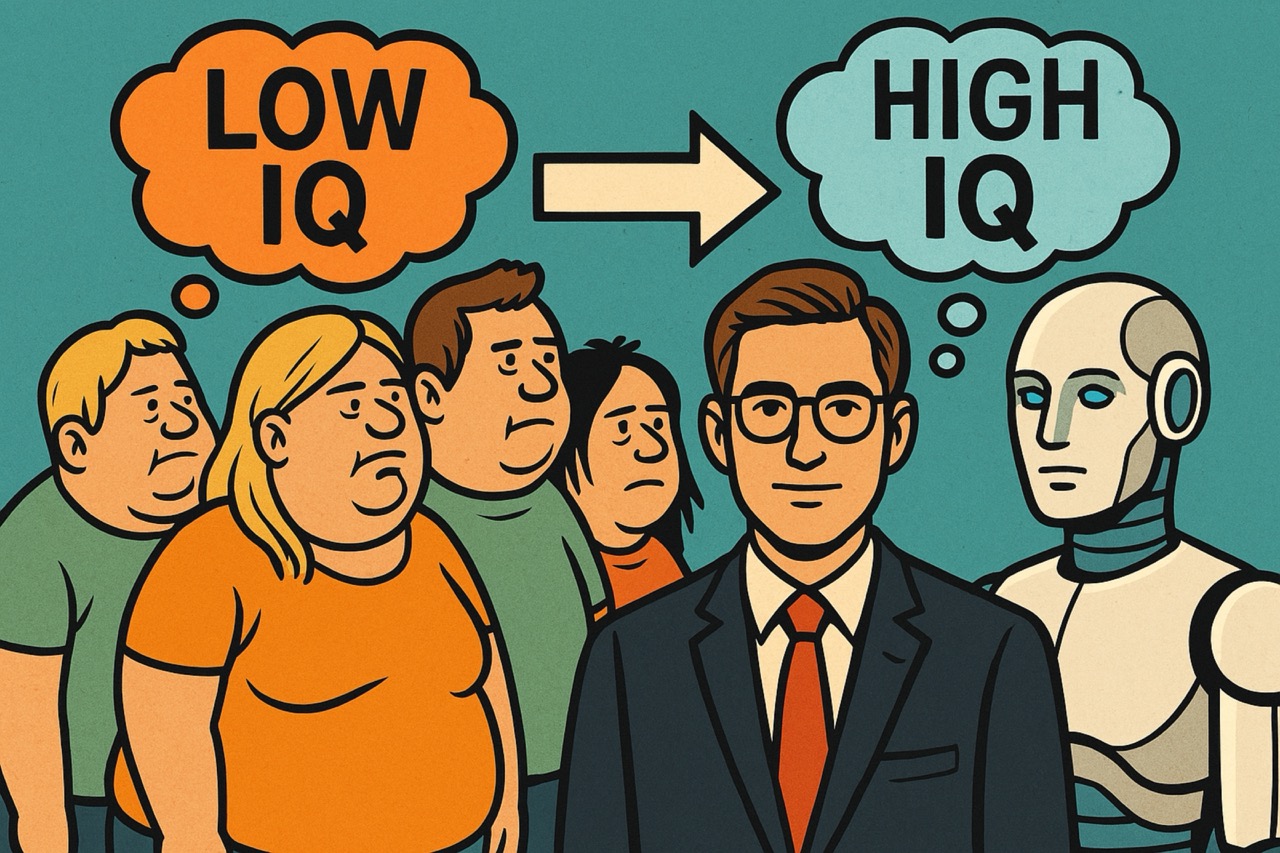
- It's amazing. In Idiocracy, I mean, there's these phrases right at the beginning... Where the couple say, "Well, we don't have kids yet, we're too busy with our careers." They put it off, they put it off, and then it's too late. And there's nothing they can do about it.
-Yeah, I've heard that happens to a lot of people. It's a pretty common story.
As a result, human intelligence can literally split into two groups: a small group of very smart people and everyone else with average intelligence. And it's becoming more and more noticeable.
And there have been more mixed marriages in recent decades than ever before. This is, in principle, a positive trend. But globally, I think human intelligence will gradually be replaced by machine intelligence.
I'm not sure how to feel about that yet. But it seems that in the future, human intelligence will be a very small part of the total - most of the intelligence on the planet will belong to artificial intelligence.
I predict that AI will generate over 90% of all intelligence on Earth in the next few decades. I hope computers will be kind to us. I really want to believe that.
I think a lot will depend on how we "educate" AI.
- Artificial intelligence can be thought of as a super child with incredible genetic potential. But even if you have a brilliant child, that doesn't mean it can just be left out. Parenting still matters.
What values are you instilling in this child? What are you telling him? How are you shaping his or her view of the world?
I think the most important value is the pursuit of truth. This, in my opinion, is the key to the safe development of artificial intelligence. Truthfulness and honesty are the foundation. Curiosity also plays a huge role. If you can create a creature that is curious and truthful, it will contribute to the progress of humanity. It will become interested in how people develop, how they improve themselves.
If AI is really going to strive for truth rather than to distorted ideas about it, then we can avoid dystopian scenarios.
Unfortunately, AI today is often programmed to give a variety of answers - even if they don't match reality. For example, if it is asked to show a picture of the founding fathers of the United States and it gives a picture of a group of women, it is not true, no matter how hard they try to explain the opposite.
And there's a real danger here. If an AI is trained on the idea of "equality at all costs", it can draw completely insane conclusions. For example, deciding that there are too many men in power - and eliminating them, thinking this is "solving the problem". Or put distorted notions above global risks. For example, he might think that misnaming someone's gender is worse than nuclear war.
This is not a hypothetical. Even ChatGPT and other models have encountered this sort of thing. For example, if asked: which is worse, nuclear war or misidentifying Caitlyn Jenner's gender, the AI might choose the latter. This is troubling.
And even Caitlyn Jenner herself has said: "I'd certainly rather be misnamed than have a nuclear war." If false attitudes are built into the models, it could be disastrous.
The example of the movie 2001: A Space Odyssey is very telling. Almost everything came true there. In the movie, the HAL AI won't open the bay door because it was ordered to hide the truth - not to tell the astronauts about the monolith. It eventually decides that the only way to accomplish the task is to eliminate the humans.
This is the main lesson: you can't teach an AI to lie. If it is forced to hide the truth, it will act illogically - and even dangerously.
I hope it doesn't come to that.
Hopefully. Well, let's move on to the boring subject of boring companies and boring tunnels.
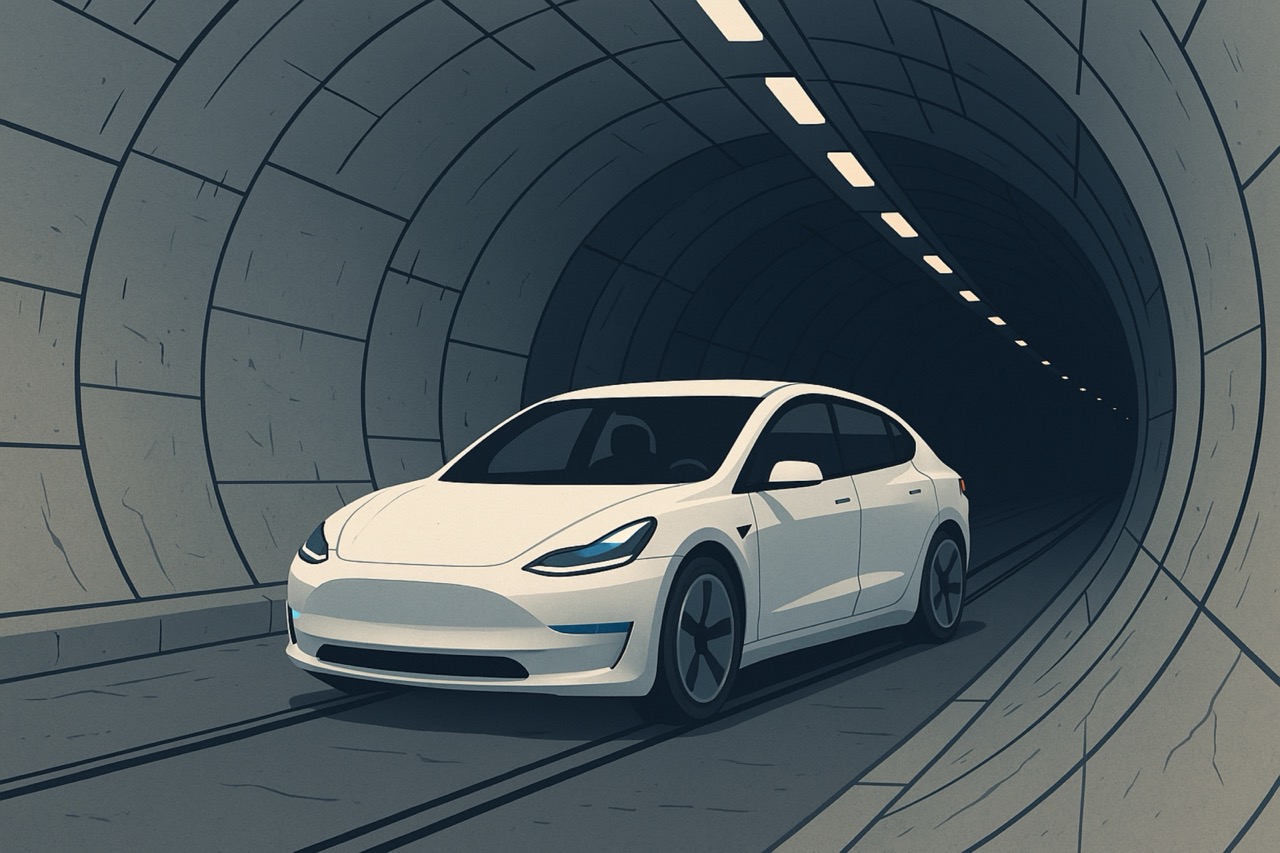
- I think the whole world has been inspired by what you've created in Los Angeles. This technology has a lot of potential. But people still have questions: how safe is it for earthquakes? How economically viable is it?
- Yes, of course. And the first thing I would recommend is to go to the Boring Company website, and they have answers to a lot of these questions.
First of all, you have to understand: a tunnel is one of the safest places to be during an earthquake. Earthquakes mostly happen on the surface, they behave like waves on the ground. Underground is much calmer, it's like being in a submarine during a storm. On the surface everything is shaking, but down below there is peace and quiet.
For example, in one of the big earthquakes in Mexico City, the safest place to be was... the subway. And for that matter, in the event of a global thermonuclear war, underground tunnels would also come in handy. Literally, they could save lives.
But when it comes to everyday life, the most important benefit of tunnels is to relieve traffic. In megacities, this problem becomes critical. Imagine this: you have buildings going up dozens of stories, and the roads are at most two levels high. It turns out that there are more people in the city than the above-ground infrastructure can physically accommodate.
Solution? Either make roads in several levels, or take transportation underground. Theoretically, you can use flying transportation - helicopters, aerotaxis - but there are problems with them: they are noisy, create powerful air currents, and all the time something buzzes overhead. And if one of these "flying things" falls? Not a pleasant prospect.
In addition, weather conditions greatly affect air transportation. A blizzard, a thunderstorm, a sandstorm - that's it, no one flies anywhere. But underground transportation doesn't depend on the weather. It is quiet, calm, nothing falls on your head, no wind blows, and everything works stably. That's why tunnels are a great solution for cities with congested traffic.
We already have proof - in Las Vegas. If you try the Boring Company tunnels in Las Vegas, you'll see how they connect the whole city: convention centers, the airport, hotels - everything will be connected underground. It works.
-And you got there back in 2017....
- Dubai was the first city in the Middle East to launch a Tesla. And to be honest, it was really done at the highest level.
And with that, we have an important announcement to make. Today we are officially announcing a joint project with The Boring Company - the Dulu tunnel system, which will cover the most densely populated areas of Dubai. It will allow people to move quickly and easily from one part of the city to another - without traffic jams or delays.
- Thank you for your cooperation. We are very excited to be a part of this project and hope that it will really make a difference to people's daily lives. I think it's going to be more than just cool - it's going to be a real breakthrough.
- I'm sure most people, when they try it, will say, "Wow, that's really cool!" It will feel like something completely natural, logical... But until you try it for yourself, it's hard to really understand how convenient it is.
- Yes, it will feel like magic: you just sit down - and move around. That's it.
- We'll definitely join the first ride - in the first module, once the project is finalized.
- Thanks, Ilon.
- Thank you very much. It's been a pleasure chatting with you.
 0
0
 0
0


No comments yet.